
Don’t Wait Until Winter: Chimney Sweeping Keasbey Homeowners Need Before These Signs Get Worse
Most chimney fires don’t announce themselves weeks in advance. They build quietly soot layer by soot layer, crack by crack until one cold night in February the flue turns into a problem nobody saw coming. We’ve responded to enough urgent calls in Keasbey and the surrounding Middlesex County communities to know that the warning signs were almost always there beforehand. The homeowner just didn’t know what to look for.
Chimney sweeping in Keasbey isn’t simply about tidiness. Keasbey’s housing stock skews older many homes here were built in the mid-20th century, and the masonry chimneys that came with them have spent decades expanding and contracting through New Jersey’s freeze-thaw cycles. That wear shows up in specific, observable ways. Below is what we tell every homeowner to watch for, and where the line falls between “handle it yourself” and “call us now.”
A Keasbey Homeowner Who Almost Waited Too Long
Last January, a homeowner on the Keasbey side of Sayreville contacted us after noticing a faint burnt-plastic smell every time they ran their gas insert. They’d been chalking it up to dust on the unit. When our technicians arrived, we found a partially blocked flue creosote had built up to the point where combustion gases weren’t drafting properly. The insert was backdrafting into the living space. A standard chimney sweeping appointment cleared the obstruction, but the liner also showed early cracking that needed attention before the next heating season. Caught early, the repair was straightforward. Left another winter, it likely wouldn’t have been.
Warning Signs That Mean You Need Chimney Sweeping Now
1. Black or Brown Staining Around the Fireplace Opening
Soot smearing on the firebox face or on the wall above the opening means smoke is spilling back into the room instead of drafting up the flue. This happens when the flue is obstructed or when creosote deposits have narrowed the passage. Don’t wipe it off and move on that stain is telling you combustion gases are entering your living space. Call a pro now.
2. A Persistent Smoky or Acrid Smell When the Fireplace Isn’t in Use
If the fireplace hasn’t been lit in days but you still catch a smoky or sour smell near the hearth, creosote is almost certainly the culprit. According to the Chimney Safety Institute of America (CSIA), creosote in its third-degree form a tar-like, glazed deposit is the leading fuel source in chimney fires. That smell means the deposit load is significant. This is not a situation to monitor; it needs professional chimney sweeping.
3. White Efflorescence on the Exterior Masonry
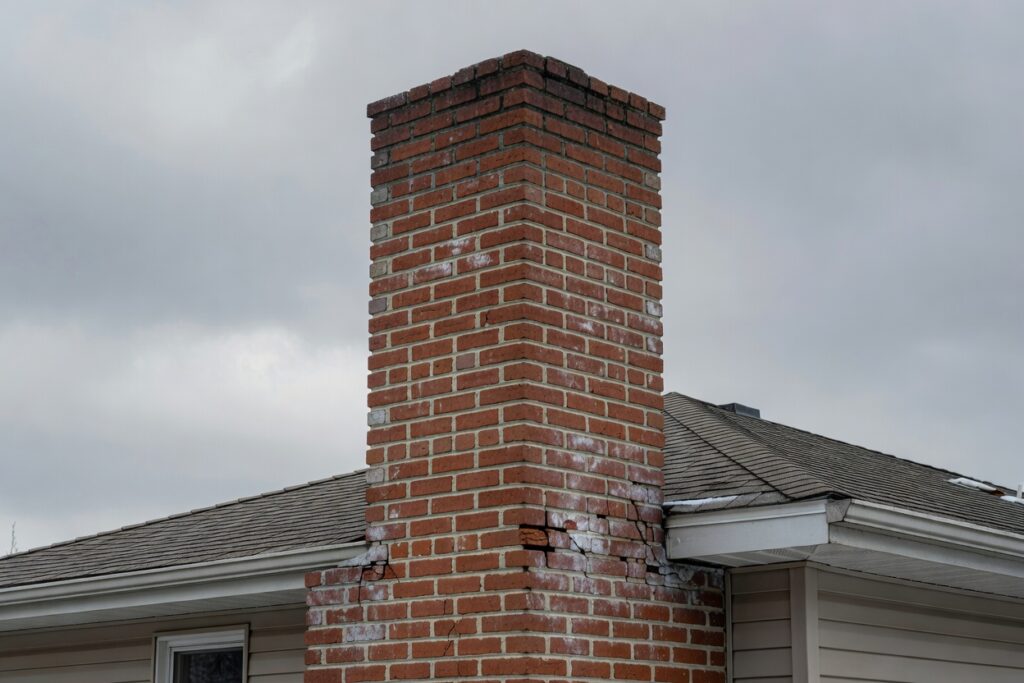
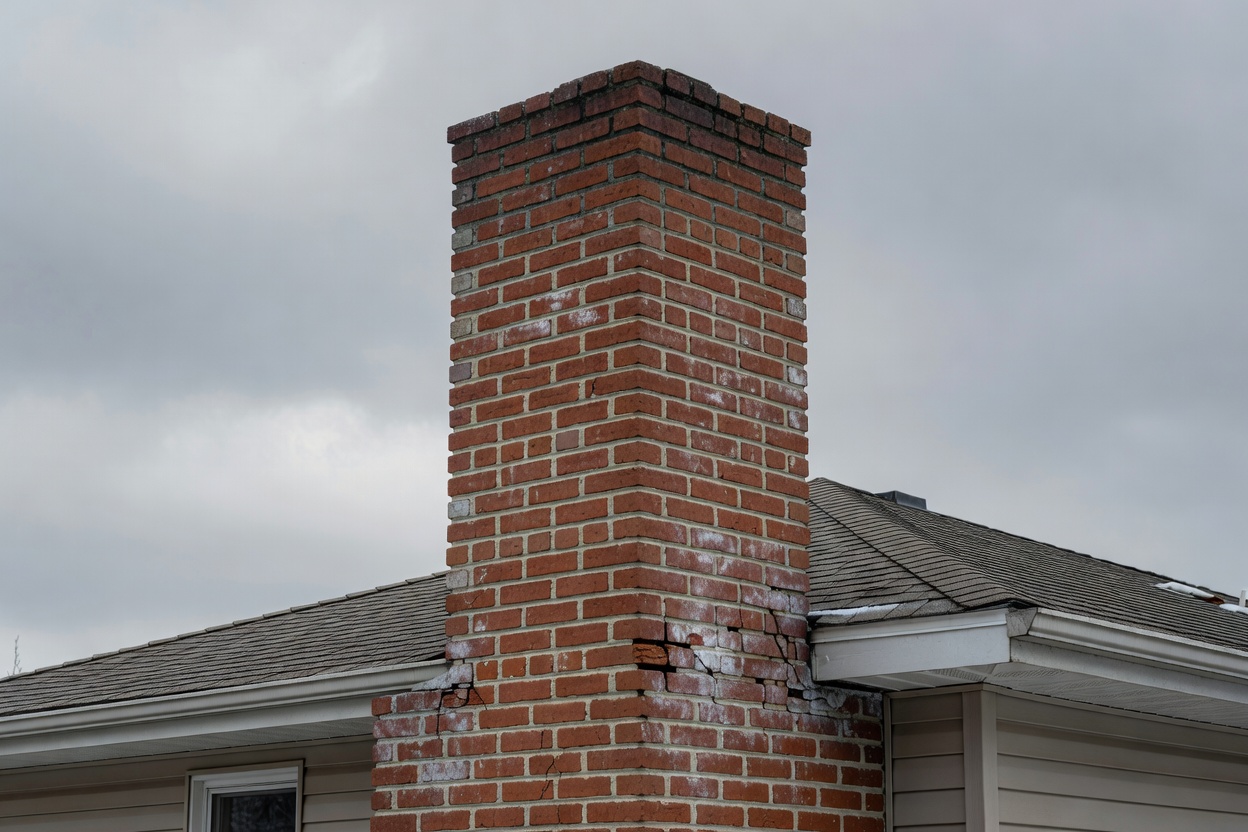
Those chalky white streaks on the outside of your chimney are mineral salts being pushed through the masonry by water. It means moisture is penetrating the brick or mortar. Left alone, the same freeze-thaw cycles that affect every chimney from Perth Amboy to Old Bridge will widen those entry points every winter. You can wipe away the white staining yourself, but the underlying moisture problem needs a professional assessment. Pair it with our chimney inspection service so we can find where the water is getting in.
4. Visible Cracks in the Mortar Joints or Brick
Stand back and look at your chimney from the yard. Hairline cracks in mortar joints are common in older Keasbey and Woodbridge homes after a hard winter, but cracks wide enough to see clearly from ground level or bricks that look like they’re shifting signal structural deterioration. This goes beyond chimney sweeping. Our chimney repair and repointing team handles exactly this, and the sooner it’s addressed, the less masonry replacement is involved.
5. Debris or Granules in the Firebox
Bits of mortar, small chunks of masonry, or gravelly dark granules sitting in the firebox are pieces of your flue liner falling apart from the inside. NFPA 211 (2024 edition, applicable through 2026) requires that flue liners be free of open joints, cracks, and deterioration that could allow heat transfer to combustible framing. Debris in the firebox is a hard sign that your liner is compromised. Stop using the fireplace and call us. This is not a wait-and-see situation.
6. A Loud Rumbling or Roaring Sound During Use
An unusually strong roar from the firebox something beyond normal draft noise can indicate a chimney fire is already underway. According to the CSIA, chimney fires can reach temperatures above 2,000°F inside the flue and may not always be immediately visible from the outside. If you hear this, the correct move is to close the damper, get everyone out, and call 911. After the fire department clears the home, call us before the fireplace is used again.
7. Rust on the Damper or Firebox
Rust means moisture has been getting into the system. A rusted damper often won’t seal properly, which allows cold air, animals, and water to enter the flue year-round. You can see damper rust yourself by looking up into the firebox with a flashlight. It’s a reliable indicator that your chimney cap or flashing may also be failing. We handle chimney cap installation and waterproofing, and in most cases a sweeping visit doubles as an opportunity to identify the moisture source at the same time.
8. Animals or Nesting Sounds in the Flue
If you hear scratching, chirping, or movement in the chimney, you likely have birds or small animals inside. Beyond the noise, nesting material is a serious fire hazard. Chimney swifts, which nest in uncapped flues throughout the Middlesex County area including Avenel and Colonia, are federally protected you cannot legally remove an active swift nest. Once a nest is inactive, a thorough chimney sweeping will clear the debris. A cap prevents re-entry. This one you should not try to resolve yourself.
What You Can Actually Handle Yourself
We’re not going to tell homeowners that nothing is in their hands. There are things you can do. Checking that the damper opens and closes fully something you can do with a flashlight from the firebox is useful before every heating season. Making sure the area around the hearth is clear of combustibles is basic fire safety. And if you burn wood, using seasoned hardwood (not green or wet wood) meaningfully reduces creosote buildup between professional sweepings.
What you can’t do safely is assess the inside of a flue liner, evaluate the integrity of the smoke chamber, or determine whether creosote deposits have reached a hazardous stage. These require proper equipment and training. The CSIA recommends annual chimney inspections for any chimney in active use that inspection plus sweeping is a single appointment with us, and it covers both.
What Chimney Sweeping in Keasbey Costs in 2026
A standard chimney sweeping in the Keasbey and greater Woodbridge area typically runs between $150 and $250 for a single flue, depending on deposit levels and the last time the system was serviced. Homes that haven’t been swept in several years common in the older sections of Keasbey and neighboring Hopelawn may require additional time or a follow-up visit if third-degree creosote is present. We provide a clear estimate before any work begins, so there are no surprises.
Get a Free Estimate from Perth Amboy Chimney
If any of the signs above look familiar, don’t put it off until the first cold snap in November. Our team serves Keasbey, Sayreville, Woodbridge, and the broader Middlesex County area, and we’re familiar with the specific challenges that older local homes present. Reach out through our website contact form to schedule a visit or request a free estimate. We’ll give you a straight answer about what your chimney needs and what it doesn’t.
Frequently Asked Questions About Chimney Sweeping in Keasbey, NJ
How often does a chimney in Keasbey need to be swept?
For any chimney in active use, the CSIA recommends at least one inspection and sweeping per year. If you’re burning wood regularly through a New Jersey winter, a mid-season check isn’t a bad idea either. Gas fireplaces still need annual inspection even though they produce less creosote blockages and liner deterioration affect them too.
Can I sweep my own chimney with a brush kit from the hardware store?
You can remove some loose soot with a brush kit, but you won’t be able to see the full length of the flue, assess liner condition, evaluate the smoke chamber, or safely handle compacted third-degree creosote. For anything beyond surface debris, a professional sweep with proper equipment and a camera inspection is the appropriate call.
What is creosote and why does it matter?
Creosote is a byproduct of burning wood it condenses on the cooler surfaces of the flue as smoke rises. In its early stages it looks like light soot; in advanced stages it’s a tar-like glaze that’s highly flammable and very difficult to remove. The more it accumulates, the higher the risk of a chimney fire. This is the main reason annual chimney sweeping matters.
Is chimney sweeping in Keasbey covered by homeowner’s insurance?
Routine sweeping and maintenance is generally not covered by homeowners’ insurance it’s considered standard upkeep. However, if a chimney fire or structural failure causes damage to the home, your policy may cover the resulting damage depending on your coverage. Keeping records of annual sweepings can support a claim if needed.
How long does a chimney sweeping appointment take?
For a single-flue residential chimney in typical condition, most appointments take between one and two hours. If we find issues that require a more thorough inspection or if there are heavy deposits, it may take a little longer. We’ll let you know what we find as we go.
Does Perth Amboy Chimney serve Keasbey and the surrounding Sayreville area?
Yes. We regularly service Keasbey, Sayreville, Woodbridge, Hopelawn, and all of the surrounding Middlesex County communities. Use the contact form on our website to request an appointment or ask any questions before booking.
Related from Perth Amboy Chimney: What Homeowners Get Wrong About Chimney Inspection Keasbey NJ · Chimney Sweep Keasbey NJ · Warning Signs You Need a Chimney Inspection Perth Amboy NJ Homeowners