
Chimney Sweep Keasbey NJ: 2026 Guide for Metuchen Homeowners
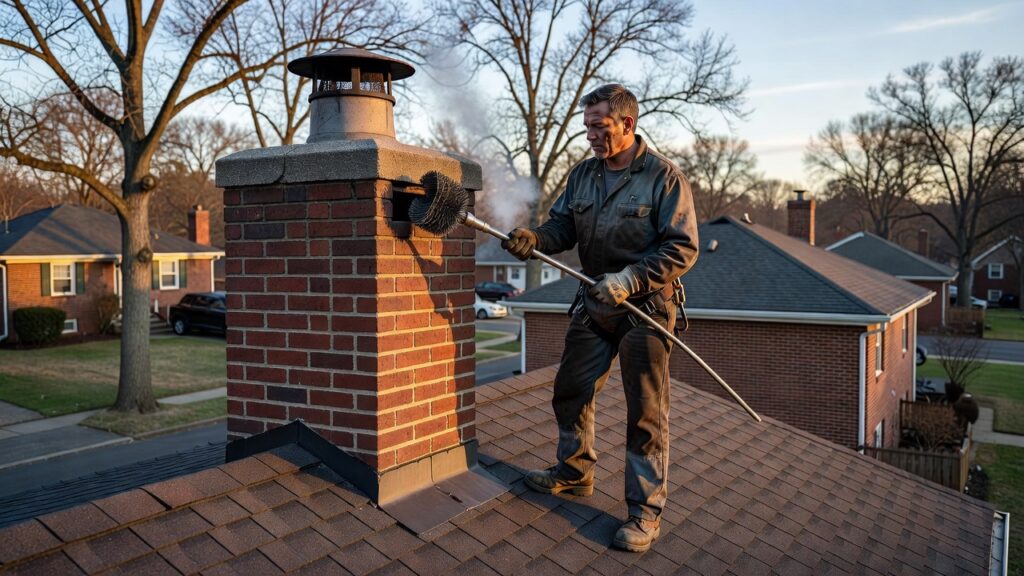
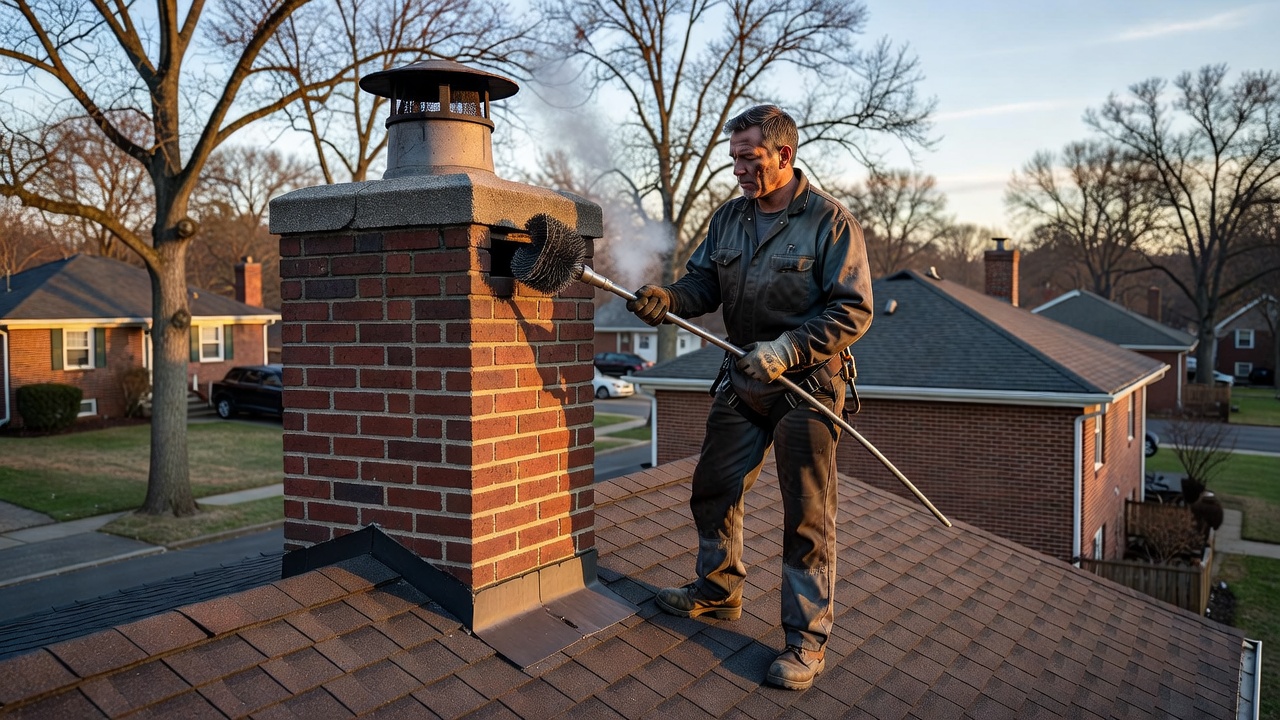
A dirty chimney does not announce itself with obvious signs. It works quietly, building up creosote layer by layer, until one cold February night it gives you something far worse than a smoky living room. We have pulled enough compacted creosote out of flues across Middlesex County to know that the homeowners most at risk are usually the ones who thought everything was fine. Scheduling a chimney sweep in Keasbey NJ or anywhere in our service area is not routine maintenance for its own sake. It is the single step that keeps a structural nuisance from becoming a structure fire.
Below we walk through the problems we actually diagnose on inspections, what causes them, how we fix them, and whether they can be caught early. This is the honest version no shortcuts.
A Call That Started in Metuchen
Last January a homeowner on a tree-lined street in Metuchen called us because her gas insert was producing a faint burning smell every time the heat kicked on. She had used the fireplace all the previous winter without a professional cleaning. When our technician ran a Level 2 inspection with a camera, we found a third-degree creosote glaze the hardened, shiny kind coating roughly four feet of the liner, combined with a cracked flue tile at the roofline. The crack was letting cold air in, and that temperature drop was condensing combustion gases against the creosote. One sustained burn away from ignition. We cleaned the flue, repaired the tile, and the smell was gone. She booked us for annual service going forward. That call is not unusual. We get variations of it out of Sayreville, Carteret, Colonia, and Woodbridge every single heating season.
Six Problems We Find and How We Actually Fix Them
1. Heavy Creosote Buildup — Third-Degree Glaze
Symptoms: Oily or tarry odor during use, reduced draw, visible black residue on the damper.
Cause: Repeated cool, smoldering fires common in older homes where homeowners bank fires overnight. The flue never gets hot enough to push combustion gases out cleanly, so they condense on the liner wall and solidify over time. According to the Chimney Safety Institute of America (CSIA), creosote in its third-degree form is extremely difficult to remove and is the leading fuel source in chimney fires.
Fix: Standard brushing will not touch glazed creosote. We apply a chemical rotary-system treatment that converts the glaze into a friable ash, then extract it. In severe cases we recommend a stainless-steel liner relining rather than leaving a compromised clay tile as the primary barrier.
Can it be prevented? Yes. Annual cleaning particularly after every cord of wood burned keeps buildup in the Stage 1 range where standard brushing handles it in under an hour.
2. Cracked or Spalled Flue Tiles
Symptoms: Small chunks of terra-cotta on the smoke shelf, a metallic or masonry smell, visible gaps on a camera scan.
Cause: Northern New Jersey’s freeze-thaw cycle is brutal on clay tile. Water gets into micro-fissures, freezes, and forces the tile apart from the inside. We see accelerated spalling in homes along the Raritan Bay corridor Laurence Harbor, Sewaren, South Amboy where the damp air compounds the problem. A chimney fire, even a brief one, can also crack tiles instantly from the thermal shock.
Fix: Minor cracks can sometimes be addressed with a heat-rated refractory sealant. Extensive cracking means the liner needs to be either replaced section by section or bypassed entirely with a continuous stainless steel liner. NFPA 211 (2026 edition) requires that flue liners be free of open joints or cracks that would allow combustion gases to contact the surrounding masonry.
Can it be prevented? A chimney cap and proper waterproofing services we provide as part of our chimney cap and waterproofing service dramatically slow water infiltration and reduce freeze-thaw damage.
3. Blocked Flue from Animal Nesting
Symptoms: Sudden loss of draft, smoke rolling into the room, chirping or scratching sounds in the wall in spring.
Cause: Chimney swifts and starlings treat an uncapped flue as prime real estate. Raccoons use them as denning sites. Once a nest is established it can partially or fully obstruct the flue opening. Worse, decomposing organic material creates moisture and acidic residue that attacks mortar joints from within.
Fix: Safe nest removal (respecting any wildlife protection rules for protected species such as chimney swifts), a full sweep, and installation of a properly sized stainless steel chimney cap. We verify draft recovery with a smoke test before we leave.
Can it be prevented? A capped flue eliminates the problem entirely. We install them on nearly every job for exactly this reason.
4. Deteriorated or Missing Mortar in the Firebox
Symptoms: Visible gaps between firebricks, loose bricks that rock when pushed, white efflorescence on the firebox interior.
Cause: Refractory mortar has a finite lifespan, especially in fireplaces that see heavy seasonal use. Water infiltration through the crown or cap accelerates deterioration significantly. We notice this pattern frequently in Edison and Iselin, where a lot of the housing stock dates to the 1950s and 1960s and original mortar has never been replaced.
Fix: We remove the compromised joints with an angle grinder or oscillating tool, vacuum the cavity clean, and pack in fresh heat-rated refractory mortar. Loose bricks are reset. If the deterioration has spread to the smoke chamber we trowel-apply a smooth parging coat to eliminate ledges where creosote can collect. This work connects directly to our chimney repair and repointing service.
Can it be prevented? Annual chimney safety inspection catches mortar failure early, when a repoint is straightforward and inexpensive compared to rebuilding a firebox from scratch.
5. Downdraft and Smoke Rollout
Symptoms: Smoke enters the room when the fireplace is lit, especially on windy days or after the house has been sealed up tight for modern energy efficiency.
Cause: This is a pressure and geometry problem. Taller surrounding trees or a neighboring roofline can create a negative pressure zone over the flue opening. Alternatively, a flue that is undersized relative to the firebox opening cannot move enough combustion gas. In well-insulated modern homes, the house itself is under negative pressure relative to the outside, pulling chimney air inward rather than outward.
Fix: Diagnosis comes first. We measure the firebox opening versus the flue cross-section, check the chimney height above the roofline against NFPA 211 minimums (10 feet above the fireplace throat, or at least 2 feet above anything within 10 feet horizontally), and assess the pressure dynamics. Solutions range from installing a outside-air intake kit to adding a flue extension or a directional cap.
Can it be prevented? A proper pre-installation review catches design problems before a fireplace is ever built. For existing systems, an annual service call is the right time to flag worsening draft symptoms before winter.
6. Failed Chimney Crown
Symptoms: Water staining on the interior ceiling near the chimney, efflorescence on exterior brick, visible cracks across the crown surface visible from the roofline.
Cause: The crown is the concrete or mortar slab that caps the chimney stack and sheds water away from the brick. A crown poured too thin, without a proper overhang, or made with standard Portland cement rather than a flexible crown coat will crack within a few years. According to the CSIA, water damage is responsible for the majority of chimney repair costs nationwide and it nearly always enters through a compromised crown.
Fix: Minor cracks are sealed with a flexible crown coat product applied by brush. Crowns that have failed structurally are removed and rebuilt with the correct overhang, drip edge, and mix. We always combine crown work with a waterproofing treatment applied to the surrounding brick.
Can it be prevented? Yes, and this is one of the clearest cases where a small annual investment prevents a large repair bill. A sound crown, combined with a routine chimney cleaning, is the baseline every Middlesex County homeowner should be on.
What a Professional Chimney Sweep in Keasbey NJ Actually Costs in 2026
A standard Level 1 cleaning with visual inspection runs roughly $150 to $250 for a single-flue system in our area. A Level 2 inspection required after any chimney fire, before purchasing a home, or when changing fuel type adds camera documentation and a more thorough assessment and typically runs $250 to $400. Repairs vary widely: repointing a firebox starts around $300 and climbs with scope; a full stainless relining can run $1,500 to $3,500 depending on liner length and access. These are realistic 2026 figures for Middlesex County; anyone quoting dramatically less without seeing the chimney is guessing.
Do Not Wait for the Problem to Find You
The homeowners we worry about most are those heating through a second or third winter without a cleaning. Creosote does not pause. Cracks do not heal. And our winters from the first cold snap in October through the March freeze-thaw runs give every weakness in a chimney system repeated chances to become a real danger. Whether you are in Metuchen, Keasbey, Fords, or Old Bridge, the risk profile is the same.
If any of the problems above sound familiar, or if you simply cannot remember the last time a professional looked at your flue, reach out to us through the contact form on our website. We offer free estimates, and we will tell you honestly what we find good news or bad. No pressure, no upselling what you do not need.
Frequently Asked Questions About Chimney Sweep Keasbey NJ and Surrounding Middlesex County
How often should I have my chimney swept?
NFPA 211 recommends that chimneys, fireplaces, and vents be inspected at least once a year and cleaned whenever deposits warrant it. For a wood-burning system used regularly through a New Jersey winter, that usually means annual cleaning. Gas appliances still need yearly inspection because liner integrity and blockages matter regardless of fuel type.
Is a chimney sweep and a chimney inspection the same thing?
No. A sweep removes combustion deposits soot, creosote, debris. An inspection evaluates the structural and safety condition of the system. A Level 1 inspection is a visual check performed alongside a cleaning. A Level 2 inspection includes camera imaging of the flue interior and is a more thorough diagnostic. We recommend combining both at every annual service visit.
What is creosote and why is it dangerous?
Creosote is a byproduct of burning wood a mix of condensed tars, oils, and carbon deposits that adheres to flue walls. In its early stages it is powdery and easy to brush out. As it accumulates it becomes sticky, then glazed and extremely hard. The CSIA identifies glazed third-degree creosote as the primary fuel in chimney fires, which can burn at temperatures exceeding 2,000°F and spread to surrounding framing.
My fireplace smells but there is no smoke in the room. Should I still call?
Yes. A persistent burning or tarry smell especially in humid summer weather or on rainy days is a reliable sign of creosote buildup inside the flue. The odor is the chimney’s way of telling you the deposit level is significant. A professional cleaning will eliminate the source, not just mask the symptom.
Can I sweep my own chimney?
Consumer chimney brushes exist, but DIY cleaning carries real risks. Without a camera or proper inspection, you can brush past a cracked liner, a nesting blockage, or a damaged smoke chamber and never know it. The cleaning is only part of what you are paying for when you hire a professional the diagnostic value of trained eyes is the other half.
How do I know if my chimney had a fire?
Chimney fires are not always dramatic. Many occur without the homeowner hearing or noticing anything beyond a brief unusual smell. Signs include puffy, honeycomb-textured creosote on the smoke shelf, warped or cracked damper components, distorted metal of a factory-built firebox, and cracked clay tiles visible on a camera scan. If you have any doubt, a Level 2 inspection will confirm it definitively.
Related from Perth Amboy Chimney: What Homeowners Get Wrong About Chimney Inspection Keasbey NJ · Smart Timing for a Chimney Inspection Hopelawn NJ · Finding a Trustworthy Chimney Sweep Near Me Perth Amboy