
Smart Chimney Repair South Amboy NJ: 2026 Guide for Keasbey Residents
Roughly one in three residential chimney fires in New Jersey involves a structure that last had professional work done more than five years prior and in a corridor like Keasbey, where post-war brick homes sit through hard winters and wet springs, that gap between service calls adds up fast. If you are starting to see white staining on the exterior of your firebox, or you notice a faint smell of smoke even when the damper is closed, those are not minor annoyances. They are the chimney telling you something is wrong.
We provide chimney repair South Amboy NJ and the broader Middlesex County area, including Keasbey, and we want to walk you through the problems we actually diagnose in the field what the symptoms look like, what is causing them, and what the professional fix involves. We also want to be honest about timing, because the difference between booking a repair in September and waiting until December is often the difference between a straightforward job and a much more expensive one.
A Homeowner in Keasbey Who Waited One Season Too Long
Last autumn, we got a call from a homeowner on a residential block near the Keasbey rail corridor. She had noticed a dark stain spreading down the inside of her firebox wall and assumed it was ordinary soot. She planned to call us “after the holidays.” By the time we arrived in February, what had started as a hairline crack in the flue liner had allowed moisture to migrate into the surrounding masonry all through the fall. The repair that might have cost her a few hundred dollars in October was now a liner replacement job. She was not unusual — we see this pattern every year, and it is entirely preventable.
The Problems We Diagnose Most Often in This Area
Spalling and Cracked Mortar Joints
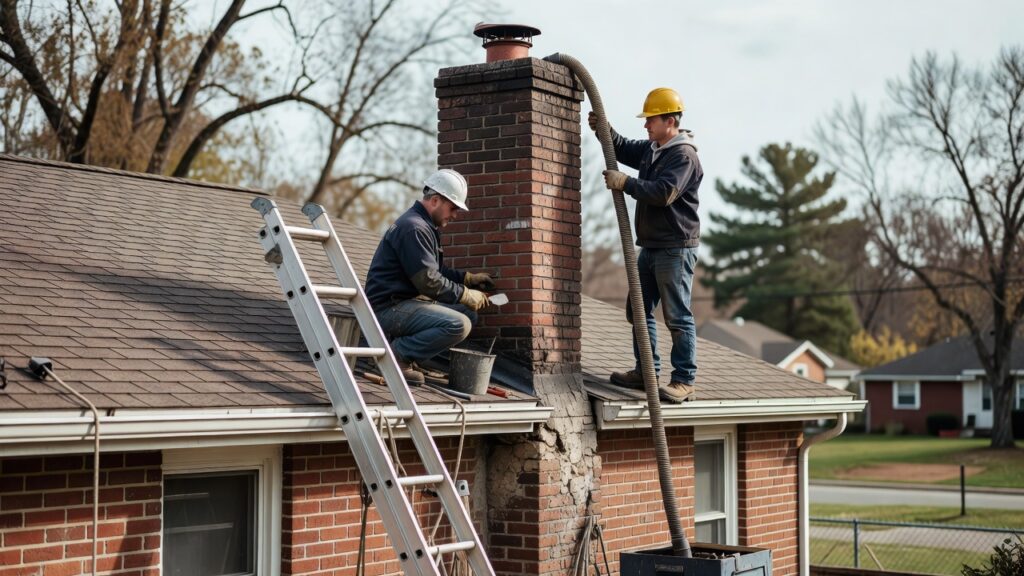
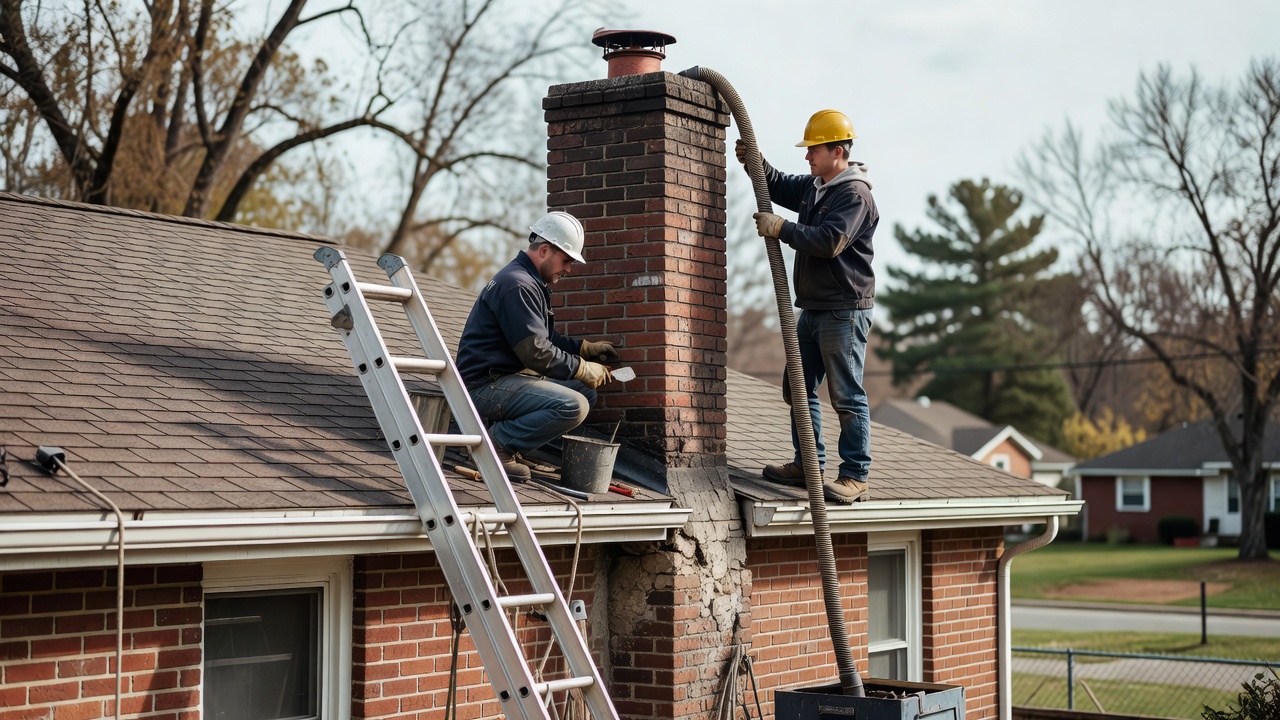
The freeze-thaw cycle in northern New Jersey is relentless. Water gets into small mortar joints, freezes, expands, and opens the joint wider. By the next thaw, the gap is larger. Homeowners usually notice this as chunks of brick face or mortar sitting in the firebox or on the roof, or they see visible gaps in the exterior chimney stack. The fix is repointing grinding out the deteriorated mortar to the proper depth and packing in fresh, correctly mixed mortar. It sounds simple but the mortar type matters; using interior-grade or mismatched mortar in a chimney stack will fail within a couple of seasons. We use mortar mixes rated for high thermal and weather exposure.
Can this be prevented? A waterproofing treatment applied every few years slows moisture penetration significantly. It is one of the more cost-effective things a homeowner can do.
Damaged or Missing Chimney Cap
A cap keeps rain, birds, and debris out of the flue. When the cap is cracked, rusted through, or missing entirely which we see often on older Keasbey and Sewaren properties water runs straight down the flue. The symptom is usually a musty smell in the firebox, rust staining on the damper plate, or visible water pooling at the firebox floor after rain. The fix is straightforward: cap replacement. What makes it more involved is that a poorly sized cap will either trap combustion gases or pull off in wind. We measure the flue opening and match the cap accordingly.
Flue Liner Cracks
This is the one that carries the most safety weight. According to the Chimney Safety Institute of America (CSIA), a cracked or deteriorated flue liner is one of the leading contributors to residential chimney fires and carbon monoxide intrusion. The liner is the clay tile or stainless steel system that channels combustion gases out of the home. Cracks develop from thermal shock, settling, or age. Symptoms include a smoke smell in upper rooms when the fireplace is in use, visible dark staining on exterior masonry above the firebox, or debris (tile fragments) found in the firebox. Diagnosis requires a camera inspection there is no reliable way to assess liner condition from the top or bottom alone. Repair options depend on the severity: isolated cracks in a clay liner can sometimes be addressed with a high-temperature sealant or a cast-in-place relining system. More extensive damage usually means installing a stainless steel liner insert.
Can this be prevented? Annual inspections catch liner deterioration early. NFPA 211 (2026 edition) requires that chimneys used regularly be inspected at least once per year by a qualified professional.
Damaged or Stuck Damper
A damper that will not fully close lets conditioned air escape year-round and lets cold air pour in during winter. One that will not fully open restricts draft and can cause smoke to back up into the living space. The mechanism is often corroded from moisture intrusion or warped from heat over time. On many older homes in Carteret and South Amboy, we find the original cast-iron throat dampers have rusted to the point where they move only a few inches in either direction. Repair sometimes means simply cleaning and lubricating the mechanism. More often, it means installing a top-mounted damper — a better design that also doubles as a cap which eliminates the corrosion problem permanently.
Efflorescence (White Staining on Exterior Masonry)
That chalky white deposit on the outside of a chimney stack is called efflorescence. It forms when water moves through masonry, dissolves soluble salts, and deposits them on the surface as it evaporates. The staining itself is not structural damage, but it is a reliable indicator that water is actively moving through the masonry. Left alone, the underlying cause whether a cracked crown, failed mortar joints, or no cap continues to do damage below the surface. The fix is to identify and stop the water source first, then clean the staining. Applying waterproofing without fixing the source just traps moisture inside the masonry and accelerates spalling.
Chimney Crown Deterioration
The crown is the concrete or mortar slab that seals the top of the chimney stack around the flue tile. It takes direct weathering and it cracks. A cracked crown is one of the most common entry points for water in Middlesex County homes. Homeowners rarely see it because it requires getting on the roof to inspect properly. Symptoms are often indirect: staining on the interior ceiling near the chimney, damp smells, or deteriorating mortar joints just below the roofline. A minor crack can be filled with a flexible, elastomeric crown sealant. A crown that has heaved or broken apart significantly needs to be rebuilt.
Why Timing Changes the Cost Equation
Mortar work and crown repairs cannot be done in freezing temperatures fresh mortar needs ambient temperature above 40°F to cure properly. That effectively closes the window for exterior masonry repair from around mid-December through late February in this part of New Jersey. Homeowners who discover a problem in January are facing a wait, and during that wait, the damage continues. According to the National Fire Protection Association, heating equipment including fireplaces and chimneys is involved in roughly one in six home heating fires nationally. A compromised chimney used through a cold winter is not a theoretical risk.
Booking chimney repair South Amboy NJ in September or October means the work gets done before the ground freezes, before contractor schedules fill up, and before a small crack becomes a structural project. We see a significant volume of calls from Old Bridge, Sayreville, and South Amboy homeowners in late November when it is already too cold to properly address masonry damage outdoors. The answer at that point is either to wait or to do only the interior work and come back in spring neither is ideal.
Pricing for common repairs in 2026 varies based on scope. Repointing a single side of a chimney stack runs roughly $300–$700. Cap replacement is typically $150–$400 depending on size and material. A full stainless liner installation in a standard single-story-above-roofline chimney generally falls in the $1,500–$3,500 range. These are realistic ballpark figures the actual cost depends on access, chimney height, and what our inspection finds.
What Happens During Our Diagnostic Process
We do not quote repairs from the street. A proper diagnosis means getting on the roof to examine the cap and crown, running a camera down the flue, and inspecting the firebox and damper from below. Only after that do we know what we are dealing with. This matters because a homeowner who calls about a smoke smell might have a damper problem, a liner crack, or a blockage and the fix for each is completely different. Our chimney inspection service is the starting point for any repair conversation, and we are transparent about what we find before any work is proposed.
If your home in Keasbey, South Amboy, Colonia, or anywhere in Middlesex County has a chimney that has not been looked at in the last twelve months, now before peak heating season is the right time to schedule. Use our website contact form to request a free estimate, and we will get you on the calendar.
Frequently Asked Questions: Chimney Repair South Amboy NJ
How do I know if my chimney needs repair or just a cleaning?
Cleaning removes soot and creosote buildup but does not address structural issues. If you are seeing smoke in the room when the fireplace is in use, smelling smoke when it is not, noticing white staining on the exterior masonry, or finding mortar or brick fragments in the firebox, those point toward repair needs. A Level 1 inspection — which we perform as part of every cleaning visit — will tell you which category you are in. According to NFPA 211 (2026), an annual inspection is the standard for any chimney in regular use.
Is chimney repair in South Amboy and Keasbey something I can do myself?
Minor tasks like applying a chimney cap cover or brushing away loose debris are within a careful homeowner’s reach. Mortar repointing, crown repair, flue liner work, and damper replacement are not they require the right materials, the right mix ratios, and proper access equipment. Incorrect mortar or improperly installed liner sections can create carbon monoxide hazards. We strongly recommend professional diagnosis before any structural work.
What is the best time of year to schedule chimney repair in Middlesex County?
Late summer through mid-October is ideal. Exterior masonry work requires ambient temperatures consistently above 40°F. Contractor schedules tend to be more flexible in September than in November, and you avoid the situation of discovering a problem after heating season has already started. Many homeowners in South Amboy and Sewaren wait until they smell smoke in October and then find themselves booking two to three weeks out.
How long does chimney repair typically take?
Most common repairs — repointing, cap replacement, crown sealing, damper replacement are completed in a single visit of two to four hours. Liner replacements or significant crown rebuilds can take a full day. We will give you a realistic time estimate after the inspection.
Does homeowners’ insurance cover chimney repair in New Jersey?
It depends on the cause. Damage resulting from a sudden eve a storm, a falling tree limb is generally covered subject to your deductible and policy terms. Deterioration from age or lack of maintenance is typically excluded. We can document the condition of the chimney thoroughly, which helps homeowners work with their insurer. We recommend confirming coverage details directly with your insurance provider.
How often should chimney mortar joints be repointed in this climate?
In Middlesex County’s climate, with its repeated freeze-thaw cycles, most exposed chimney masonry benefits from an inspection of mortar condition every five to seven years. Chimneys on older homes which make up a significant portion of the housing stock in Keasbey, Carteret, and South Amboy often need repointing sooner, particularly if the original mortar was soft or if no waterproofing treatment has been applied. The CSIA recommends that any visible mortar deterioration be addressed promptly to prevent water intrusion from compounding the damage.
Related from Perth Amboy Chimney: Finding a Trustworthy Chimney Sweep Near Me Perth Amboy · Smart Chimney Inspection Woodbridge NJ · Essential Chimney Waterproofing Perth Amboy NJ