
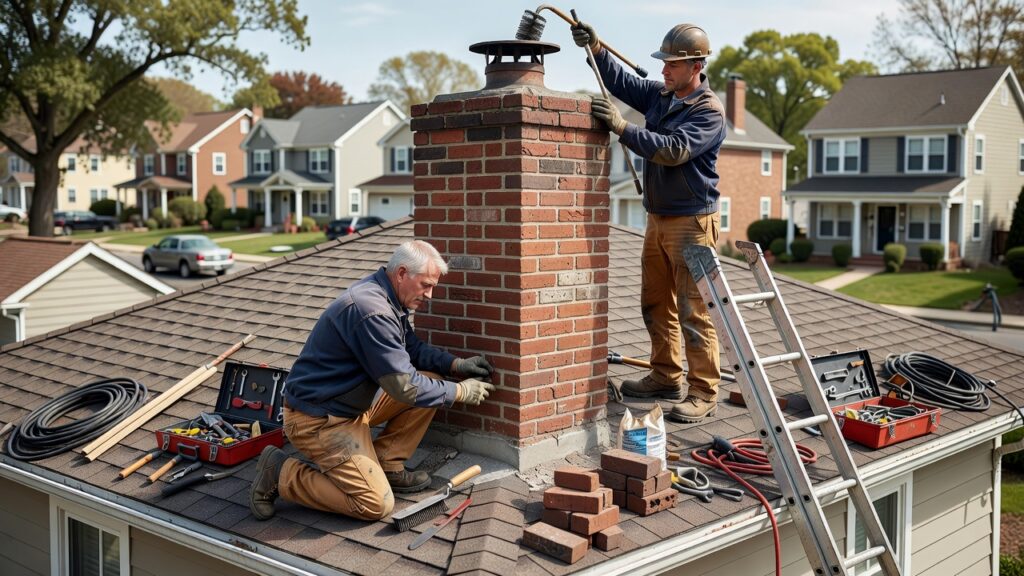
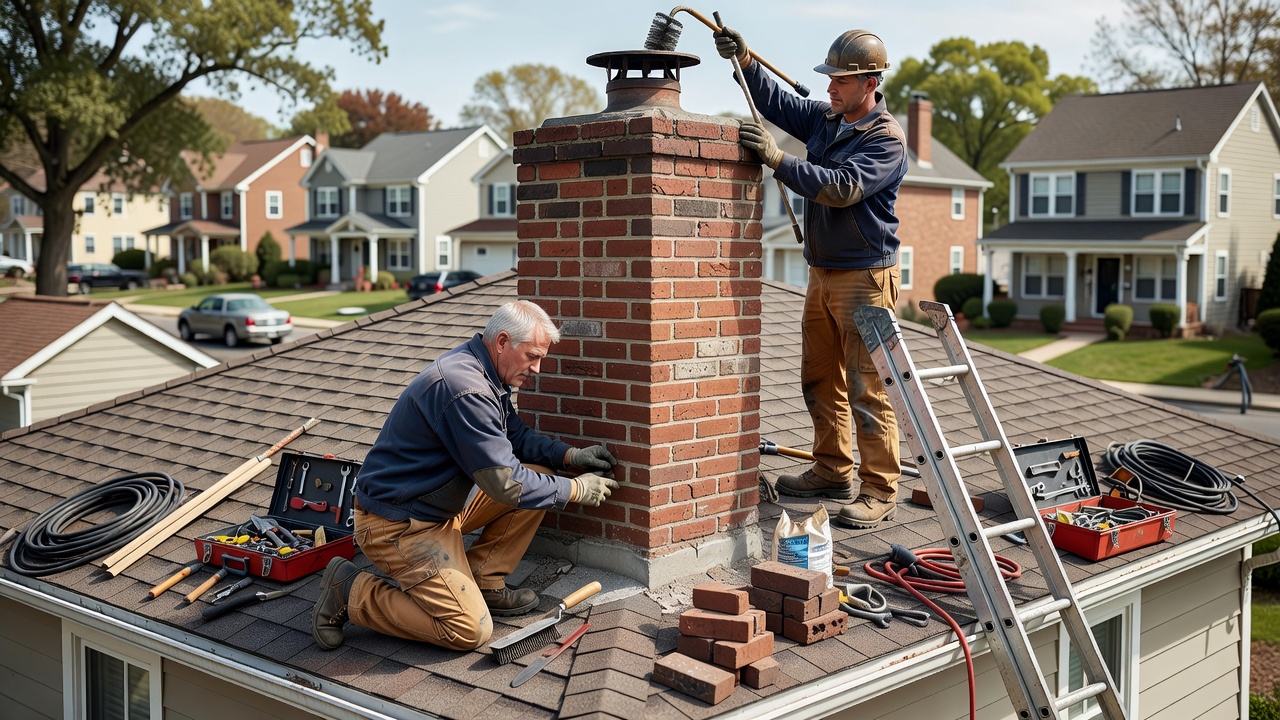
Honest Chimney Repair Woodbridge NJ: 2026 Guide for Fords Residents
Most homeowners in Fords don’t think about chimney repair until something forces the issue a crack in the mortar they spot while cleaning gutters, a smell drifting down into the living room, or a mason’s offhand comment during another job. By that point, a small repair that might have cost a few hundred dollars has often grown into something considerably more involved. We see this pattern constantly across Middlesex County, and a lot of it comes down to the same cluster of misunderstandings that homeowners carry around without realizing it.
We want to set some of those straight. Not to lecture, but because chimney repair Woodbridge NJ and the surrounding towns Fords, Keasbey, Sewaren generates a surprising amount of conflicting information, and a homeowner who understands what’s actually happening in their masonry makes better decisions, spends less money, and avoids genuinely dangerous situations.
A Call from Fords That Illustrates the Problem
Last February, a homeowner on the south side of Fords called us after noticing white streaks running down the face of their chimney. They’d looked it up online and concluded it was just cosmetic — something called efflorescence, which they read was harmless. They asked if we could “power-wash it off.” We scheduled a look, and what we found was more significant: the crown had cracked over the winter, water had been migrating into the brick, and the efflorescence was the visible evidence of a moisture problem that had already begun working into the mortar joints. The crown repair, tuckpointing, and waterproofing came to just under $1,100. Had they waited another season, the spalling on the upper courses would likely have required full brick replacement on two faces a repair that runs $2,500 to $4,500 in this market. The staining wasn’t cosmetic. It was a warning.
Chimney Damage Is Not Always Visible from the Ground
One of the most persistent assumptions we encounter is that if a homeowner can look up at a chimney and not see anything obviously broken, the structure is fine. Brick and mortar can look intact from thirty feet below while the interior flue liner is cracked, the crown is failing, or the flashing has separated from the masonry. According to the Chimney Safety Institute of America (CSIA), a Level 2 inspection which includes examination of accessible areas inside the flue is recommended any time a property changes hands or after any significant weather event. A standard visual check from a ladder doesn’t meet that threshold. Our area’s freeze-thaw cycles, which can cycle dozens of times between November and March in Middlesex County, put consistent mechanical stress on masonry that simply isn’t visible from the exterior.
Repairs Done Without Addressing Moisture Are Temporary
We often arrive at a property in Colonia or Iselin where a previous contractor patched spalled bricks or filled a crack in the crown and did reasonable work but never waterproofed afterward. Within two or three winters, the same area is deteriorating again, and the homeowner assumes masonry just doesn’t last. What actually happened is that water re-entered the same channels and the freeze-thaw cycle picked up where it left off. Tuckpointing or crown repair without a breathable masonry sealant applied afterward is, at best, a partial fix. NFPA 211 (2024 edition) is explicit that chimney systems must be maintained to prevent water infiltration, because water intrusion is one of the primary drivers of structural deterioration over time. We always discuss waterproofing as part of chimney repair Woodbridge NJ and Fords jobs — not as an upsell, but because skipping it often means the repair doesn’t hold.
Not Every Contractor Quoting Chimney Work Is Qualified for It
General masonry contractors do excellent work on patios, walkways, and foundations. Chimney repair is a narrower specialty. The geometry of a flue, the interaction between liner materials and combustion gases, proper flashing integration, and the specific mortar types appropriate for high-heat environments are not automatically part of a general mason’s training. We’ve corrected repairs in Sayreville and Avenel where well-meaning contractors used standard Portland cement mortar in joints which is harder than the surrounding brick and causes the brick itself to crack under thermal expansion rather than allowing the mortar to flex as it’s designed to. The right mortar for most historic Middlesex County chimneys is a softer, lime-based mix. According to the CSIA, improper mortar selection is a documented cause of accelerated masonry failure, particularly in older brick that was originally set in softer compounds. Asking whether a contractor has chimney-specific experience is a fair and important question before any work begins.
Small Cracks Are Not Something to Monitor They’re Something to Fix
Homeowners frequently describe a crack in the crown or a few deteriorated mortar joints as something they’re “keeping an eye on.” We understand the instinct no one wants to spend money unnecessarily, and waiting to see if something gets worse feels prudent. The problem is that the mechanism doing the damage doesn’t pause. A hairline crack in a chimney crown, especially heading into a Middlesex County winter, gives water a point of entry. Water expands roughly nine percent in volume when it freezes. That expansion happens inside the crack, widening it slightly. Each freeze-thaw cycle repeats the process. By April, what was a hairline is a gap. A chimney repair Woodbridge NJ call in October for a crown crack that might run $250 to $450 routinely becomes a $900 to $1,400 repair by spring if it’s left through the winter. Monitoring small cracks is a reasonable approach for a painted wall. For exterior masonry exposed to northern New Jersey winters, it’s an expensive habit.
A Liner Problem Is Not Optional to Fix
Some homeowners hear that their flue liner is damaged and treat it as something to schedule when convenient, especially if the fireplace is working without any obvious issue. This is the area where we feel the most responsibility to be direct. A compromised liner allows combustion gases — including carbon monoxide — to migrate into living spaces, and it increases the risk of a flue fire reaching surrounding framing. NFPA 211 requires that the flue liner be free of open joints, cracks, or any condition that allows passage of combustion products. This isn’t a guideline open to interpretation, and it’s the standard that governs our inspections and our recommendations on every chimney repair Woodbridge NJ job we complete. If we identify a liner issue, we’ll explain exactly what we found, show photographs, and outline the options — relining, repair, or in some cases a stainless-steel insert — so the homeowner can make an informed decision. We never pressure, but we also won’t downplay something that affects household safety.
Talk to Us Before the Problem Gets Bigger
Homeowners across Fords, Keasbey, and the broader Woodbridge area can reach us through our website contact form for a free estimate. Our team is familiar with the housing stock in this part of Middlesex County the older colonials along the Raritan waterfront communities, the mid-century brick-face homes common in Fords, the variety of firebox configurations we see in Old Bridge and Laurence Harbor and we bring that local experience to every inspection and repair. Whether you’ve spotted efflorescence, noticed a smell, or just haven’t had a professional look at your chimney in a few years, getting eyes on it is always the right starting point. Learn more through our chimney inspection service or reach out directly through our contact page to schedule.
Frequently Asked Questions: Chimney Repair in Woodbridge and Fords NJ
How much does chimney repair cost in Fords or Woodbridge NJ in 2026?
Costs vary significantly by what’s needed. Crown repairs typically run $250 to $550 depending on severity. Tuckpointing a section of deteriorated mortar joints often falls between $400 and $900. Full flue relining, which is a more involved job, generally ranges from $1,800 to $4,500 in Middlesex County. We provide free on-site estimates so you’re not guessing.
How do I know if my chimney needs repair or just cleaning?
A cleaning addresses creosote and debris inside the flue. Repair addresses structural or masonry issues — cracks in the crown or liner, deteriorated mortar joints, failed flashing, or spalling brick. Often, a cleaning reveals repair needs you weren’t aware of, which is why our team notes any concerns during every service visit. Our chimney cleaning service includes a basic assessment at no extra charge.
Is chimney repair something I can do myself?
Some very minor exterior caulking repairs are within a capable DIYer’s range. Anything involving the crown, mortar joints, liner, or flashing really should be handled by someone with chimney-specific experience. Improper mortar selection alone using a mix that’s too hard for the surrounding brick can cause damage that’s more expensive to correct than the original problem.
How often should a chimney in Middlesex County be inspected?
The CSIA and NFPA 211 both recommend a professional inspection at least once a year, regardless of how often the fireplace is used. In northern New Jersey, where freeze-thaw cycles are frequent and winters are long, annual inspections catch the kind of moisture-driven deterioration that accumulates quietly season to season.
Does homeowner’s insurance cover chimney repair?
Coverage depends on your specific policy and the cause of the damage. Sudden events like a lightning strike or a fallen tree limb are more commonly covered than gradual deterioration, which insurers typically classify as a maintenance issue. We can document conditions thoroughly if you need to submit a claim, but we always recommend confirming coverage details with your insurer before assuming a repair will be reimbursed.
What’s the difference between tuckpointing and full chimney rebuilding?
Tuckpointing removes deteriorated mortar from joints and replaces it with fresh material preserving the existing brick. It’s appropriate when the brick itself is sound, but the mortar has aged out. Full rebuilding is necessary when the brick has spalled, cracked, or failed structurally, usually from years of water infiltration that wasn’t addressed. Catching mortar joint failure early is almost always significantly cheaper than reaching the point where the brick itself needs replacing.
Related from Perth Amboy Chimney: Smart Chimney Inspection Woodbridge NJ · Smart Chimney Repair South Amboy NJ · Honest Pricing for Chimney Sweep Perth Amboy NJ